By ANDREW BUNCOMBE IN WASHINGTON
The reputation of the Titanic was destroyed long ago - not least on that very night in 1912 when the supposedly unsinkable luxury liner hit an iceberg and slipped beneath the waters of the north Atlantic in less than three hours.
Since then, the memory of the Titanic and the 1500 crew and passengers who died have been assailed by films, books and Hollywood blockbusters - each bearing a varying degree of accuracy to what actually happened.
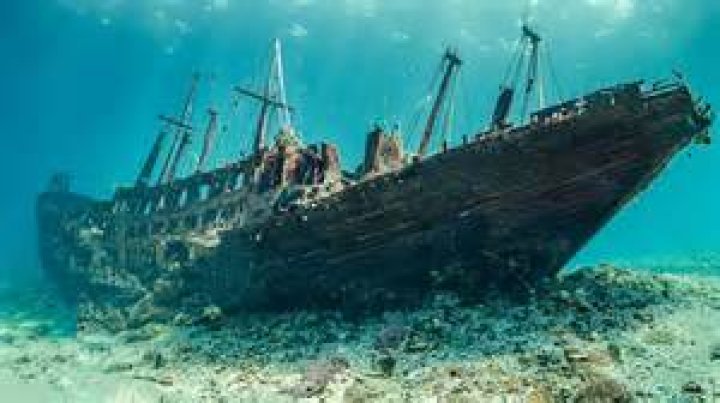
But now the very substance of the vessel itself - lying 3.2km on the ocean floor - is under threat in an unprecedented manner. Ironically, the problem is partly caused by those people trying to preserve the Titanic and gauge its destruction.
Experts who have been visiting the wreck of the liner over the past decade say its decay is accelerating year by year, largely as a result of scientists and wealthy tourists who visit the site in mini-submarines.
In the past 10 years the ship's crow's nest, where a lookout warned in vain, "Iceberg right ahead!", has vanished and the forward mast has crumpled. The captain's cabin - where the captain was resting when the ship struck the iceberg at 11.40pm on the night of April 12 - has also all but disappeared.
"I was shocked," Alfred McLaren, an ocean scientist and retired submariner who dived on to the wreck in 1999 and then revisited it last month, told the New York Times.
"It's much more heavily deteriorated. I expected her to be in about the same shape as 1999. But, God Almighty, there's more [rust] everywhere."
Paul Nargeolet, a French mini-sub pilot who has explored the wreck more than 30 times, said each dive revealed new damage. "Things are going quicker and quicker."
The wreck of the Titanic was discovered in 1985, split in two on the floor of the north Atlantic, 610km off the coast of Newfoundland, by a French-American team. It had lain there since sinking on its inaugural voyage between Southampton and New York, and though the bow and stern were sitting 1km apart, the wreckage was in very fair condition.
Robert Ballard, a leader of the mission, wrote in his 1987 book The Discovery of the Titanic, that if it was left alone the vessel "won't appear to change much in my lifetime".
But of course the vessel has not been left alone and Ballard himself is partly responsible for that.
Though he now argues for leaving the site to nature, he initially called for the removal of artefacts from the wreck.
In testimony before Congress he said: "I am proposing ... that any future revisits to the Titanic which would involve deep diving submersibles ... dedicate a portion of their diving time to carefully recording and recovering those delicate items lying outside the hull of the ship itself ... I am in favour of recovery of that material ... to ensure they are protected and the world will have the ability to touch or, so to speak, feel the ship."
Since then there have been numerous visits to the wreck by various groups of scientists and tourists as well as the ship's court-appointed salvage company, Atlanta-based RMS Titanic, which has recovered more than 6000 scattered artefacts.
"It is becoming very serious indeed because everybody [who visits] feels they have to leave something," said Edward Kamuda, director of the Titanic Historical Society.
"It is starting to look like graffiti. The thing is going to deteriorate anyway, but it doesn't help when you've got all these subs going by, disturbing the sediment."
He said the mini-subs' propellers threw up debris and damaged the wreck.
In 1996 divers found wreckage from a mini-sub accident scattered on a Titanic deck.
The wreck also attracts tourists who pay up to US$36,000 ($62,000) a dive. In July 2001 a New York couple, David Leibowitz and Kimberley Miller, were married in a mini-sub resting on the Titanic's bow.
Somewhat late in the day, the Governments of the United States, France, Britain and Canada are talking about how to preserve what remains of the wreck.
In June the US National Oceanic and Atmospheric Administration sent six scientists down to survey the wreck and assess its future.
Kamuda says they should leave well alone.
"It's a grave site. I think they would be better to leave it alone, put a [web] camera down there and then if anyone wants to look at it they can just go to their local library and have a look."